Max Beckmann in Berlin
First published in Apollo Magazine
An exhibition of Max Beckmann’s early works in Berlin reveal the painter's slow path to maturity, including false starts and missteps as well as successes
When the 20-year-old Max Beckmann moved to Berlin in 1904, it was the heyday of the Berlin Secession and a time of experimentation in the city. He quickly established himself in Edvard Munch’s studio at Eisenacher Str. 103 in the Schöneberg district; Munch was travelling in Norway. It was an odd time: the reign of Emperor Wilhelm II was at its peak, and the Secession was struggling with the question of whether to embrace the modish techniques of the Expressionists. The young Beckmann was firmly anti-Expressionist, dismissing the works of the international avant-garde, which he had studied in 1903 in Paris, as superficial and ‘decorative’. An exhibition of his work, on view at the Berlinische Gallery until February, provides an overview of Beckmann’s career from 1905 to 1937, when he emigrated to Amsterdam after the Nazis classified his art as ‘degenerate’.
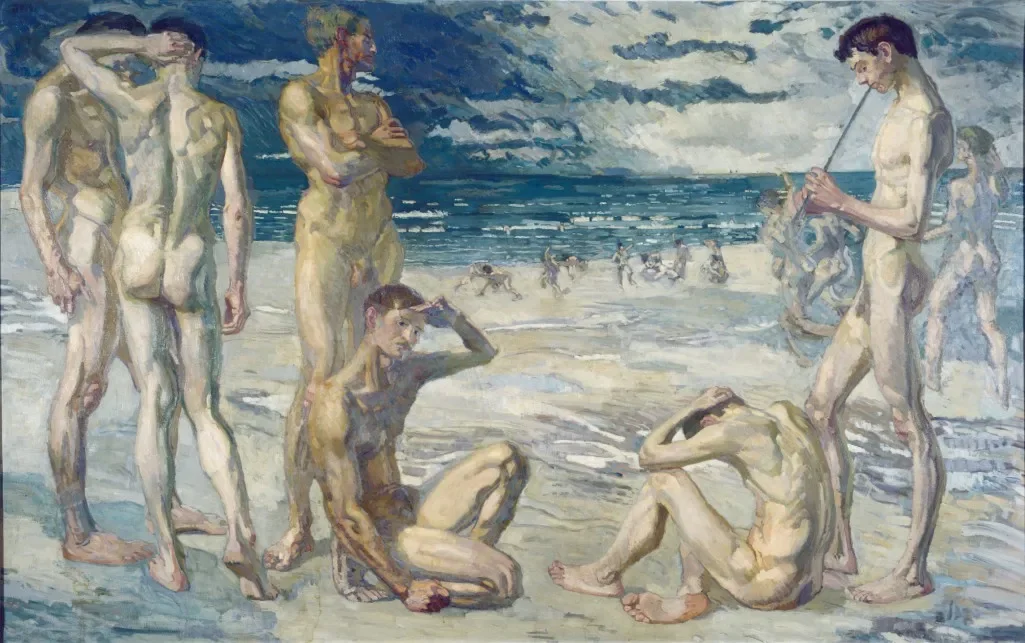
Junge Männer am Meer 1905, Max Beckmann